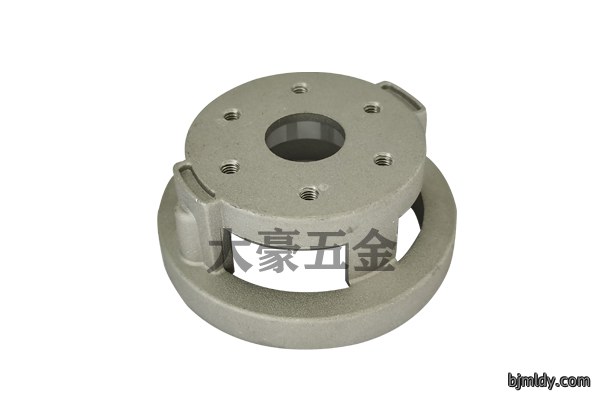
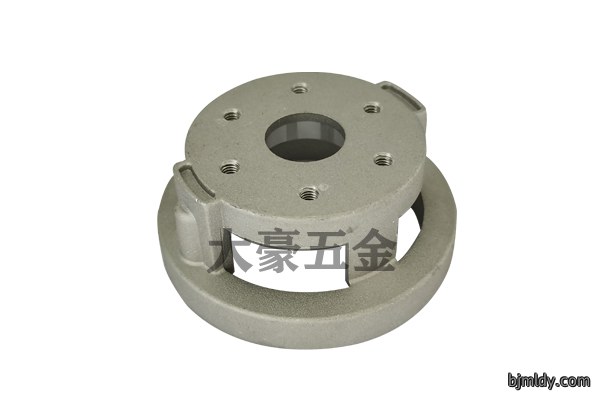
Aluminum die casting represents a specialized category within the broader pressure casting manufacturing sector, functioning as a fundamental metalworking process wherein heated liquid aluminum or aluminum alloy materials are injected into precision-engineered molds using dedicated die casting machinery. The methodology involves loading molten aluminum or aluminum alloy compounds into the material inlet port of a professional die casting apparatus, which then applies controlled pressure to force the liquefied metal through the casting mold system.
The high-pressure die casting process enables the production of gold-based house components characterized by intricate geometric complexity, well-defined dimensional boundaries, remarkably thin wall sections, and deeply recessed cavity structures that would prove extremely challenging or economically unfeasible to manufacture through conventional machining
Die casting manufacturing technology enables the production of metal components with dimensional precision specifications that reach tolerance grades of 11 to 13 on the ISO tolerance scale, with exceptional cases
(3) High data utilization rate. Because of the high precision of the die casting parts, only a small amount of mechanical processing can be assembled and used, and some die casting parts can be directly assembled and used. The data utilization rate is about 60-80 percent, and the blank utilization rate is 90 percent.
Within the manufacturing sector, high production efficiency represents a critical operational advantage for industrial enterprises seeking competitive differentiation. The die-casting methodology demonstrates superior performance characteristics that address this requirement through multiple interconnected mechanisms.
(5) Facilitate the use of inlays. It is easy to set the positioning structure on the die casting mold, which is convenient to insert the insert and meet the special performance requirements of the die casting part.