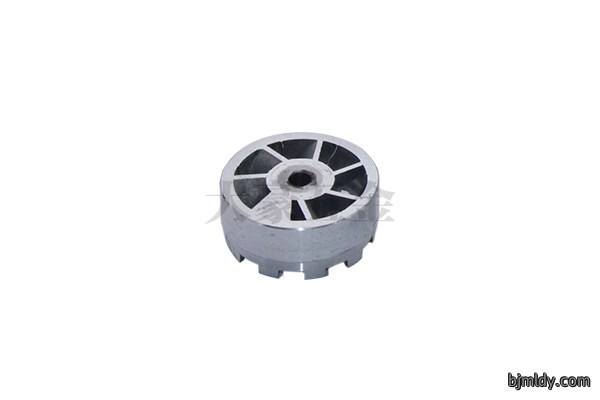
Aluminum materials and aluminum alloy demonstrate inherent characteristics of good fluidity and plasticity, enabling manufacturers to produce a diverse range of complex geometric shapes and intricate die casting configurations that would prove difficult or impossible to achieve through conventional casting methods. The casting process utilizing aluminum alloy and metal aluminum yields die cast components characterized by high precision tolerances and superior surface finish quality, attributes that collectively function to substantially diminish the quantity of post-casting machining operations required during component finishing phases. This reduction in downstream machining work translates directly into meaningful decreases in labor intensity across manufacturing facilities, while simultaneously generating measurable cost savings in electricity consumption and raw metal material waste.
The four base processes of the die-casting aluminum industry are annealing, normalizing, quenching and tempering, and these four processes are known as the "four fires" in die casting, and the relationship between quenching and tempering is very close in the die-casting process, and the two are indispensable.
Normalizing is to heat the workpiece to the right temperature and cool it in the air, mainly used to improve the cutting function of the material, and can also be used for some parts that need not be high as the end of die casting. Quenching is to heat and hold the workpiece, in water, or by and other inorganic salt solution and other quenching media rapid cooling, after this process, the produced steel will harden, but also make the steel brittle. In order to reduce the brittleness of the steel, the quenched steel can be placed below 650 degrees Celsius at a temperature higher than normal temperature for a long time, and then cooled, which is called tempering.