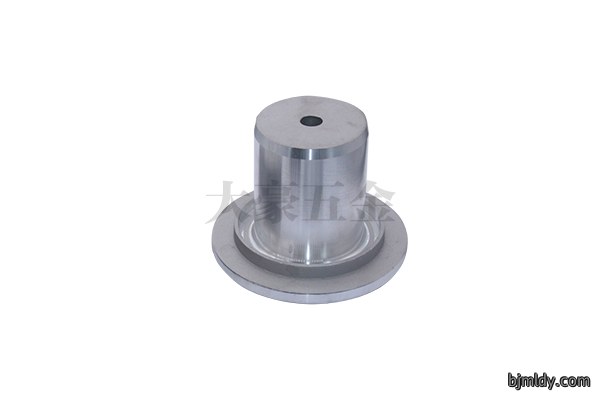
Aluminum suitable for die casting process represents a specialized category within the broader manufacturing landscape, commonly referred to as die cast aluminum, which typically takes the form of die cast aluminum alloy compounds engineered for this specific application method. This material classification incorporates a sophisticated set of high technical content systems, including core withdrawal mechanisms, precision cooling apparatus, and related infrastructure designed to manage material flow and thermal dynamics throughout the production cycle.
Die casting aluminum represents a manufacturing process characterized by two fundamental operational parameters: elevated injection pressure combined with rapid material flow velocity. Within the industrial production context, die casting aluminum components are manufactured through the application of mechanical force that propels molten metal into steel molds at pressures typically ranging from several thousand kilopascals to tens of thousands of kilopascals, with advanced systems capable of reaching pressures up to 2×10⁵kPa.
1, good product quality: casting size accuracy is high, generally equivalent to 6~7, or even up to 4; Good surface finish, generally equivalent to 5~8; The strength and hardness are higher, the strength is generally increased by 25~30% compared with sand casting, but the elongation is reduced by about 70%; Stable size, good interchangeability; Die cast aluminum thin-walled complex castings.
2, high production efficiency: high machine productivity, such as the domestic JⅢ type horizontal cold air die casting aluminum machine can die casting aluminum 600~700 times in an average of eight hours, small hot chamber die casting aluminum machine can die casting aluminum 3000~7000 times in an average of eight hours; Die casting aluminum type long life, a die casting aluminum type, die casting aluminum bell alloy, life can reach hundreds of thousands of times, even millions of times; Easy to realize mechanization and automation.
The economic advantages delivered through die-cast aluminum manufacturing demonstrate substantial cost optimization across the production lifecycle, beginning with the precision dimensional control inherent to the die-casting process itself. When aluminum components are manufactured through die-casting techniques, the resulting parts exhibit surfaces that are inherently smooth and exhibit minimal surface irregularities, which directly reduces or in many cases entirely eliminates the need for subsequent mechanical finishing operations such as milling, grinding, or turning that would otherwise be required if parts were produced through alternative casting or machining methods.