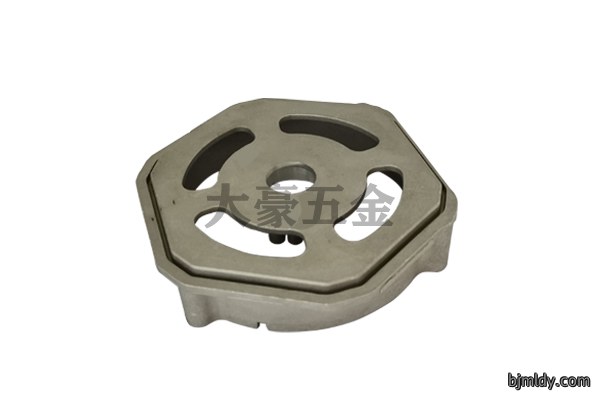
Aluminum alloy die casting is completed in a short period of time filling process, it is easy to cause gas roll and affect the quality of die casting. For this reason, oxygenated die casting machines and aluminum alloy die casting machines have been developed, and medium pressure die casting machines have also been developed rapidly, and some aluminum die casting manufacturers have adopted skew forms. Die casting process automation and die casting computer control and die casting flexible machining unit (FMC) are also gradually developed
Oxygen pressure casting represents a specialized manufacturing technique within the broader field of metal casting processes where oxygen gas is systematically introduced into both the pressure chamber and the mold cavity prior to the introduction of molten aluminum. This preparatory phase serves to displace existing air pockets and residual gases that would otherwise become trapped within the solidifying metal.
(2) Vacuum pressure casting is to first remove the air in the die casting cavity, and then press into the liquid metal. Its characteristics are: it can eliminate or shovel the porosity inside the casting, improve the mechanical function and surface quality of the casting casting greatly reduce the back pressure of the cavity, and can use the advantages of lower specific pressure and poor casting function of alloy aluminum die casting
Aluminum alloy die casting method can eliminate or reduce the porosity inside the die casting by applying advanced pressurization techniques and controlled cooling cycles, thereby improving the mechanical function and surface quality of the die casting through enhanced material density and
② Aluminum alloy die casting method greatly reduces the back pressure of the cavity, can use a lower specific pressure and casting function of the poor alloy, it is possible to use a small machine die casting larger castings
Aluminum alloy die casting method, which represents a significant advancement in metalworking and precision manufacturing, improves the filling con
Aluminum alloy die casting method and sound die casting method, when subjected to comparative analysis across manufacturing parameters, demonstrate production power
After quenching and tempering treatment cycles are applied to steel materials, the resulting metallurgical structure demonstrates comprehensive mechanical function across multiple performance parameters, including substantial low temperature impact toughness that remains stable even at sub-zero operational conditions and notably low notch sensitivity that reduces stress concentration failures in components with geometric discontinuities, while simultaneously achieving excellent hardenability characteristics that allow deeper hardened case penetration throughout the material cross-section, enabling the material to obtain higher fatigue strength when subjected to oil cooling processes compared to alternative cooling mediums.