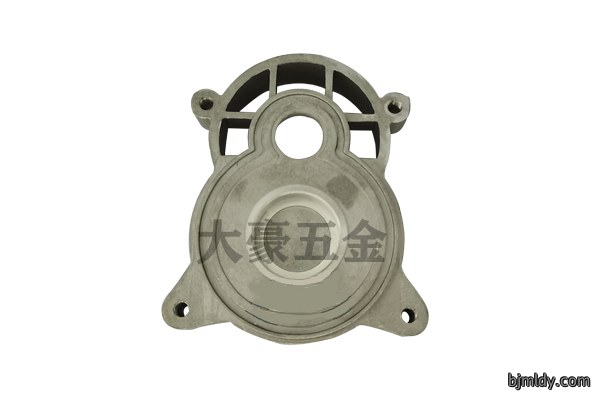
Solution treatment represents a critical metallurgical process in die casting manufacturing that involves heating the die casting component to a precisely controlled elevated temperature, maintaining the material at this temperature for an extended duration to ensure uniform thermal diffusion throughout the casting structure, and then subjecting it to rapid cooling procedures that facilitate the achievement of maximum dissolution of al
So the role of solution treatment is mainly related to which aspects
Solution treatment, a critical thermal processing methodology within the die casting industry, involves systematically heating the die-cast component to an elevated temperature regime, maintaining the material at this precise thermal state over an extended duration, and subsequently applyin
Solution treatment, a fundamental metallurgical process within the casting and materials engineering field, functions to enhance multiple material properties simultaneously through controlled thermal cycling and chemical transformations.
The determination of insulation duration during the casting process operates as a function of the material's dissolution rate in the specific medium employed, a parameter that remains intrinsically interconnected with multiple technical variables including the particular composition of Taiwan gol
In the field of industrial casting production, thermal management during the solidification phase represents a critical process variable that directly influences the final mechanical characteristics of cast components.
In the context of metallurgical processing and material science applications, solution treatment represents a critical thermal process employed to dissolve precipitat
The role of solid solution treatment in aluminum die-casting applications becomes increasingly significant when examining the manufacturing challenges that arise during production workflows. Aluminum die-casting, as a prevalent metal-forming technique in automotive components, consumer electronics housings, and industrial equipment production, frequently encounters material surface irregularities during the casting and solidification phases. In the process of manufacturing products, the solidification dynamics and mold interaction commonly produce thin rough edges and burrs along parting lines and gate areas, which has a direct impact on both the appearance and functional quality of products.