13706184288

Wuxi Dahao Hardware manufacturing Co., LTDTel: 13706184288(Mr. Hua) Fax: 0510-88731371 Mail box: [email protected] 公司位於江苏省无锡市锡山(shan)區阳(yang)江鎮杨家橋村黄家跋地區,该地處长三(san)角工業走廊腹地,毗(pi)鄰(lin)多個製造業聚集區,交(jiao)通網(wang)絡发達,為(wei)企業的物流(liu)運輸和區域协作提供了便利条件。  |
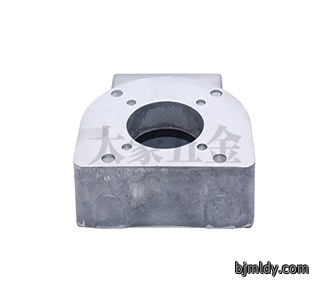
The characteristics and application of aluminum die casting parts are described brieflyIssuing time:2024-07-22 10:12 It is understood that pressure casting is referred to as die casting, which is a method of filling the die casting cavity with liquid or semi-liquid metal at a higher speed under high pressure and solidifying under pressure to obtain castings. The precision and surface quality of aluminum die casting manufacturers are higher than other casting methods, can die casting thin wall parts or inlays with complex shapes, high strength and hardness, high productivity, but the equipment investment is large, it is not appropriate to carry out large margin cutting and heat treatment due to the high speed of die casting, the type of gas is difficult to discharge in time. The variety is limited because of the high speed and high temperature erosion of the liquid flow, the life of the press type is very low. At present, die casting manufacturing has been widely adopted across multiple industrial sectors including automotive production, agricultural machinery such as tractors, precision instrumentation, and defense applications, representing one of the most significant metal forming technologies in modern manufacturing. Die casting processes can be fundamentally classified into two primary categories: black metal die casting involving ferrous materials and non-ferrous metal die casting encompassing lighter alloys, and although these processes share the common designation of die casting, their underlying metallurgical properties, processing methodologies, and equipment requirements differ substantially. The variety of products that aluminum die casting manufacturers produce encompasses a substantially broad spectrum of industrial and consumer applications, spanning across multiple sectors including automotive components such as engine blocks and transmission housings, motorcycles where die casting enables the production of engine crankcases and gearbox bodies, telecommunications equipment housings and connector components, home appliances ranging from washing machine drums to refrigerator components, hardware products including hinges and fasteners, power tools where die casting produces motor housings and gear assemblies, information technology devices requirin Since the commercial production of die-cast aluminum alloy was put into operation in 1914, it has been rapidly developed with the development of the car industry and the invention of cold chamber die-casting machine, establishing aluminum casting as a foundational manufacturing process across multiple industrial sectors. The proliferation of die-cast aluminum alloy applications accelerated significantly during the mid-20th century as automotive manufacturers sought lightweight alternatives to iron and steel components, driving innovation in casting equipment and metallurgical composition.
|